Masada from Tel Aviv
A palace-fortress on a desert mesa above the lowest place on earth — climbed at dawn or ridden to by cable car, and paired with the float that the road home runs right past.
The short version
- The drive runs about two hours from Tel Aviv, dropping through the Judean desert to the Dead Sea road and the mesa’s eastern base; tours bundle Masada with Ein Gedi and a float stop in the standard triple.
- Masada is a national park under the Israel Nature and Parks Authority — entry, hours, and the cable car’s schedule at parks.org.il; the site opens early precisely for the sunrise climbers.
- The Snake Path zigzags up the eastern face — 45 to 60 minutes of steps for the fit, headlamps in the pre-dawn, and the sunrise over Jordan’s mountains as the paycheck; summer closes it to ascents by mid-morning on heat protocols.
- The cable car runs from the visitor center to the summit in three minutes — the dignified alternative, and the standard descent even for climbers.
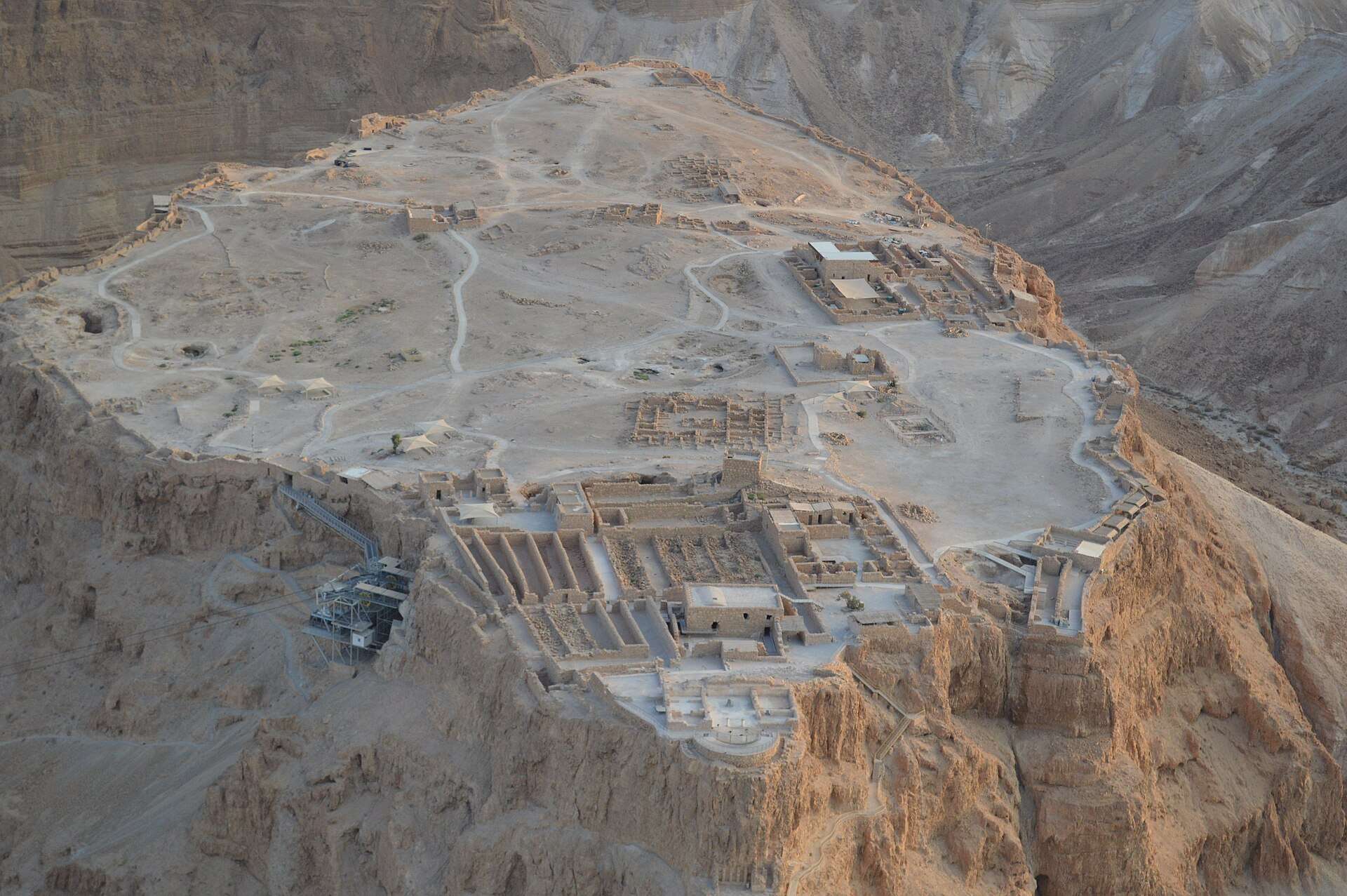
- The summit holds Herod’s engineering: the three-tier northern palace hanging off the cliff, the bathhouse, the cisterns that made a desert mesa habitable — and the siege works below, the Roman ramp and camps still legible in the ground.
- The history is told straight on site: the 73 CE siege ended, according to Josephus’s account, with the defenders choosing death over capture — an account the excavations complicate and the memorial treats with care rather than slogan.

Getting there
The route runs Route 1 toward Jerusalem then down through the desert to the Dead Sea’s shore road — sea level falls away on a signposted countdown until you’re driving 400 meters below it. Self-drivers control the dawn timing the Snake Path wants; tours solve the logistics with less sleep lost. Fuel and water top up before the desert leg. The park’s eastern entrance (visitor center, cable car, Snake Path) is the standard; the western Roman-ramp path runs from the Arad side for those routing differently.
The visit
The sunrise version: park in the dark, climb the switchbacks with the headlamp crowd, and take the light coming over the Jordanian mountains from the casemate walls — the desert igniting below is the site’s best argument. Then the summit circuit while the air is still kind: the northern palace’s terraces, the bathhouse’s surviving frescoes, the synagogue, the cistern stairs, and the western overlook down onto the Roman ramp and the camps’ rectangles — the siege legible as a diagram. Two hours covers it with the audio or a guide carrying the history. Descend by cable car without shame. Then the road home does its second act: Ein Gedi’s spring-fed canyon for the oasis walk, or straight to a beach at Ein Bokek for the float — buoyancy as physics comedy, mud as tradition, and the strangest swim of most lives as the day’s closing entry.
When to go
October through April is the season — climbable mornings, workable afternoons, and the desert in its clear-light mode. Summer restructures everything around the heat protocols: dawn ascents only, cable car after, and the Dead Sea’s water itself running bath-hot. Winter dawns are cold on the summit — the layer you doubt in Tel Aviv proves its worth at 6am on the mesa. Holiday weeks fill the path with school groups; ordinary weekdays leave the sunrise to the headlamp faithful.
Frequently Asked Questions
Snake Path or cable car, honestly?
The path for the sunrise and the earned arrival — it’s a steady stair climb, not a scramble, within reach of ordinary fitness taken slowly. The cable car for everyone else and for every descent. There is no wrong ticket up a 2,000-year-old mesa.
How seriously should I take the heat rules?
Completely — the park closes the trail on schedule and evacuates by protocol because the desert bites casual visitors annually. The alarm’s water clause is the entry fee; the dawn plan is the whole summer strategy.
What’s the actual history here?
Herod built the fortress-palace a century before the siege; in the revolt’s last act, Roman forces ramped and breached it in 73 CE, and Josephus recorded the defenders’ mass death by their own choice. Archaeology complicates parts of the account — the site presents both the story and the scholarship.
Is the Dead Sea stop worth it?
It’s half the day’s identity — the float is singular, the beaches at Ein Bokek are free and serviced, and skipping it drives past the lowest place on earth twice without touching it. Bring flip-flops for the salt crust and skip shaving that morning; the water will explain why.
Masada from Tel Aviv or Jerusalem?
Jerusalem sits an hour closer and most tours stage from there. From Tel Aviv the day runs longer but complete — this page’s math. Either origin, the dawn discipline is identical.