Jerusalem from Tel Aviv
Forty minutes by fast train, the Old City holds sites sacred to three faiths inside one square kilometer of walls. Plan midweek around the Shabbat clock, dress for the holy places, and give it a full unhurried day.
The short version
- The fast rail line runs Tel Aviv’s HaHagana and Savidor stations to Jerusalem Yitzhak Navon in about 35–40 minutes at high frequency — times and the Shabbat schedule gap at rail.co.il; the light rail and a walk connect the station to the Old City’s gates.
- Shabbat shapes the whole calendar: trains, most transit, and much of West Jerusalem pause from Friday afternoon to Saturday night — the alarm’s midweek rule is the practical conclusion for a day trip.
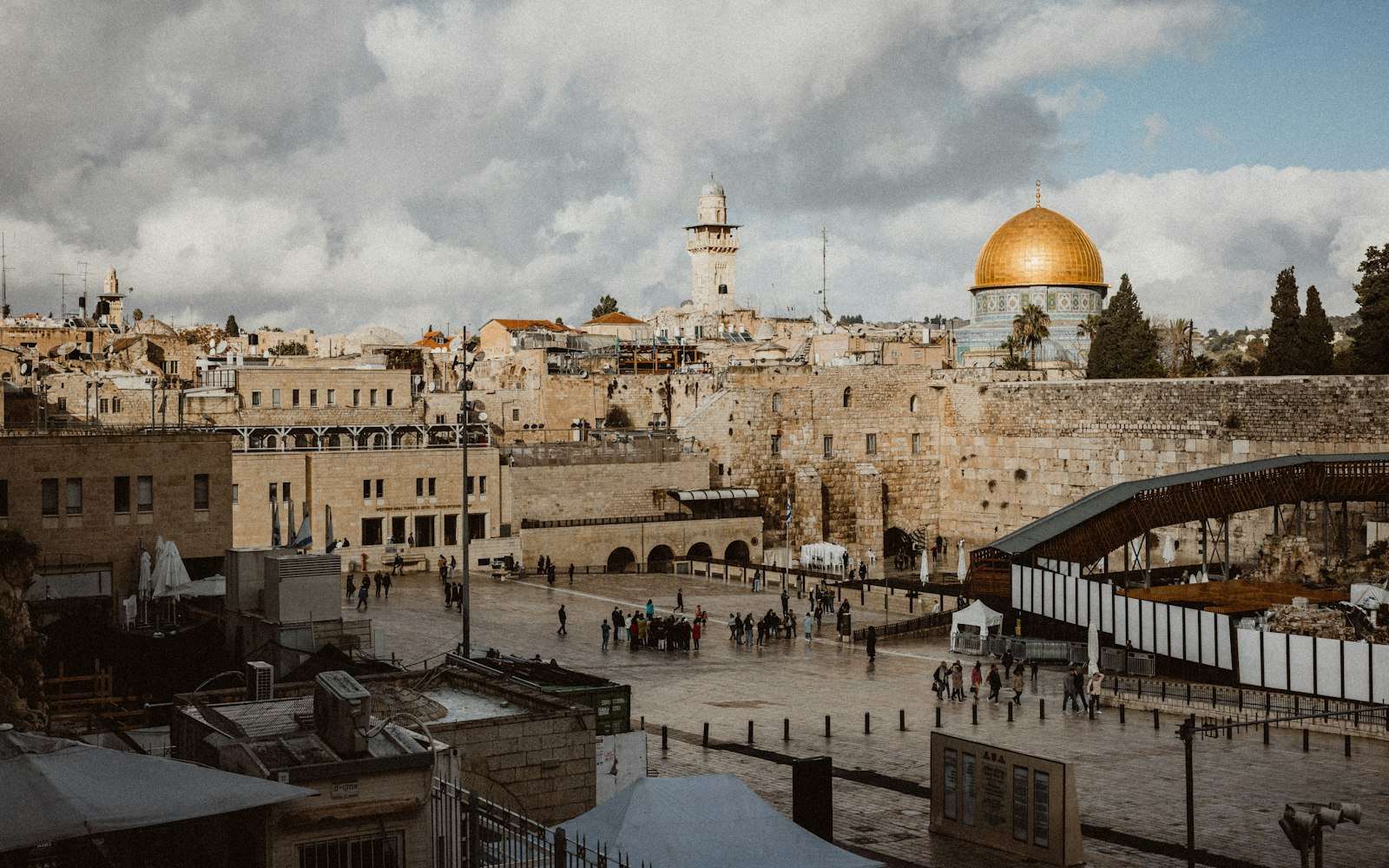
- The walled Old City divides into its four historic quarters — Jewish, Christian, Muslim, and Armenian — threaded by market lanes and pilgrimage routes; the whole ensemble walks in a day if the day is given whole.
- The Western Wall plaza is open continuously and free — modest dress required, head coverings provided, men’s and women’s sections divided, and written prayers placed in the stones by visitors of every background.
- The Church of the Holy Sepulchre — built over the sites tradition holds as Calvary and the tomb — is free with queues that reward early arrival; six Christian communities share its custody on a centuries-old arrangement visitors observe in action.
- Temple Mount / Haram al-Sharif access for non-Muslim visitors runs through designated gates in limited morning and midday windows that close for prayers and change without much notice — the alarm’s check-current-access rule applies here with full force; interiors of the Dome of the Rock and Al-Aqsa are not open to non-Muslim visitors.

Getting there
The fast line makes the logistics simple on any day that isn’t Friday or Saturday: frequent departures, a deep-station arrival at Yitzhak Navon, and the light rail’s short ride toward the Old City walls at Damascus Gate or a downhill walk to Jaffa Gate. Security screening at stations and site entrances is routine and efficiently handled — budget minutes, not hours, and carry your passport as standard practice. The evening trains run late enough for a full day plus dinner; the Friday early-afternoon cutoff is the one hard edge the alarm already set.
The day
Enter at Jaffa Gate and take the quarters in a walking order: the Armenian quarter’s quiet lanes first, the Jewish quarter’s Cardo and rooftop viewpoints, then the Western Wall plaza — unhurried, observant of the space’s rules and rhythms. The Via Dolorosa threads from the Muslim quarter’s markets toward the Holy Sepulchre; walk it for its stations and its street life both, and take the church’s interior with the patience its queues and shared custody ask. Temple Mount’s visiting window, if the day’s schedule and current access align, slots into the late morning by its own clock — checked beforehand, entered through the designated gate, dressed conservatively. Lunch runs hummus-and-bakery in the lanes or Mahane Yehuda market’s full theater a light-rail ride west. The afternoon takes the Mount of Olives viewpoint for the classic panorama across the Kidron Valley, the ramparts walk, or the Tower of David museum for the chronology the lanes scramble. The evening train home carries a day that will need sorting for weeks.
Practical notes
Modest dress — covered shoulders and knees — is required at the holy sites and sensible everywhere in the Old City; head coverings are provided where required. Photography rules vary by site and moment: follow posted signs and attendants’ guidance, and refrain where worship is underway. The city’s political and security situation can affect access, particularly around the Temple Mount and on Fridays and religious holidays — checking current conditions and official guidance before traveling is part of planning this trip, stated here plainly and without drama. Yad Vashem, Israel’s Holocaust memorial west of the center, is free with timed entry and warrants its own unhurried visit rather than an hour clipped from this day; details at yadvashem.org.
Frequently Asked Questions
Can I see the Old City properly in one day?
The four quarters, the Wall, and the Sepulchre — yes, at a full day’s unhurried pace, which is what the alarm assigned. What a day cannot do is everything around them: Yad Vashem, the Israel Museum, and the Mount of Olives each want their own hours. The day trip is a true visit, not a completion.
How do the Temple Mount visiting hours actually work?
Non-Muslim visitors enter via the designated gate (by the Western Wall plaza) during limited morning and midday windows, closed Fridays, Saturdays in practice for visitors arriving by train, Muslim holidays, and whenever circumstances require — which is why this page hedges firmly and points you to a same-week check rather than a printed schedule. The mosque interiors are not part of the visit.
Is the day trip appropriate during religious holidays?
Major holidays of any of the three faiths transform the city — profound to witness, and dense with closures, crowds, and altered access. First-time day-trippers do better midweek in ordinary time; travelers drawn by a holiday should plan it as its own deliberate trip with current guidance in hand.
What should I know about visiting the Western Wall?
It functions as an open synagogue: divided men’s and women’s sections, modest dress, provided head coverings for men, and no photography on Shabbat. Approaching the stones, standing quietly, and leaving a written note are all open to respectful visitors of any background — the plaza’s own signage covers the rest.
Jerusalem or Masada from Tel Aviv?
Masada (documented on this network) is the desert history day with its own early-start rules; Jerusalem is the city of layered centuries at forty minutes’ reach. They answer different draws, and neither substitutes for the other — with two days available, the standing order is Jerusalem midweek, Masada at dawn.